
Goldfish Tank Mates That Live Well Together
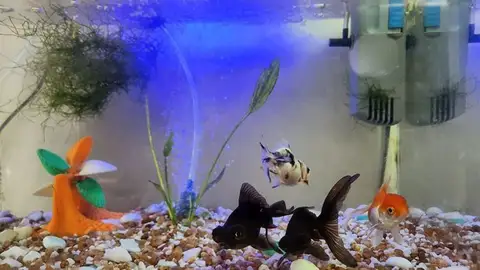
Goldfish tank mates that live well together are usually other goldfish with a similar body shape, tail type, and swimming ability. Keep slow fancy varieties with suitable fancies, and common or comet goldfish with other single-tailed goldfish. Small tropical fish and shrimp are poor default choices because they can be swallowed or need a different setup.
You do not need to add another species to make the tank complete. First check that your aquarium has room and filtration for the adult animals, not just their size in the store.
Compare companions before buying
| Companion | My recommendation | Reason |
|---|---|---|
| Similar fancy goldfish | Best starting point for a fancy tank | More even swimming and feeding ability, though individuals still differ. |
| Common or comet goldfish | Match with other single-tailed goldfish | Fast swimmers can outcompete slower fancies. |
| Large mystery snail | Possible in some tanks, with a backup home | Fish may nip its tentacles or steal its food. |
| Guppies, small tetras, or shrimp | Skip as a routine pairing | Small animals may be eaten; water and social needs also differ. |
| White Cloud Mountain Minnows or small danios | Skip as a general recommendation | Sharing cooler water does not remove the risk of being swallowed. |
| Plecos, loaches, or barbs | Research the exact species in a separate stocking plan | Adult size, group needs, feeding behavior, and fin-nipping can create problems. |
The RSPCA advises keeping single- and twin-tailed varieties apart because slower fish may miss out on food. No pairing is guaranteed: have a suitable place to separate animals if it fails.
Match fancy fish by swimming and feeding ability
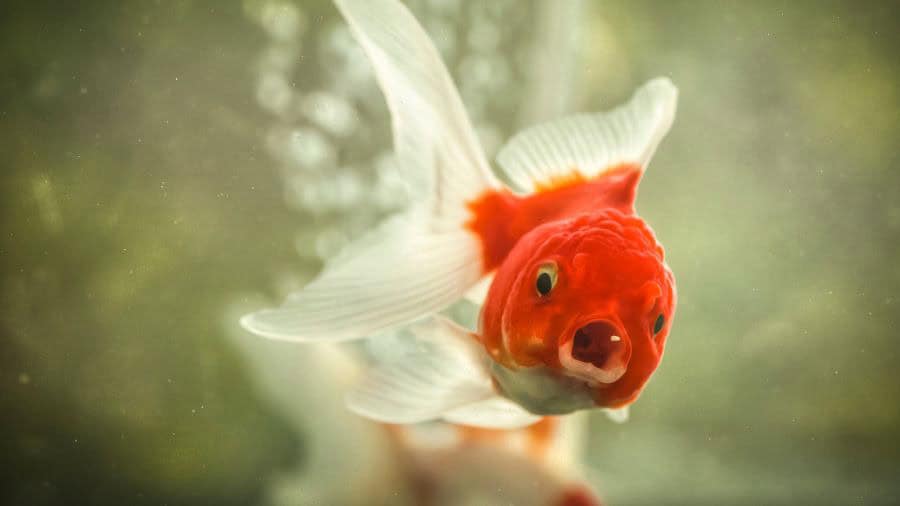
A Fantail and a Black Moor are both fancy goldfish, but the label alone does not make them equal competitors. A fish with limited vision or a less stable body may need longer to find a meal.
Watch every fish eat. Spread food over more than one spot if a stronger fish takes it all. A quiet fish that survives but keeps missing meals is not doing well in the group.
Avoid mixing slow twin-tailed fancies with fast comets and commons. Plan for adult size and swimming space before buying another fish.
Check water needs, space, and total waste
Compare the temperature, pH, and hardness needs of both animals. Their useful long-term ranges need to overlap. Do not select a companion only because a store calls it peaceful or cold-water.
The RSPCA aquarium guide explains that different species need different water conditions and enough room as they grow. A heater alone does not decide whether two species can share a tank.
Adding a schooling species also means housing an appropriate group, not one spare fish. That group adds waste and needs space of its own. Leave the aquarium as it is if it cannot support more adults.
Keep guppies and small schooling fish in suitable tanks of their own
I would not choose guppies as regular companions for goldfish. They are small tropical livebearers, while goldfish grow much larger. Even if you find a temperature overlap for a particular setup, the size and feeding risks remain.
The same caution applies to small tetras, rasboras, minnows, and danios. Fast swimming does not protect a small fish all day and night. A mix that looks fine beside a young goldfish can become unsafe as it grows.
Do not add barbs or other known fin-nippers to a slow fancy tank. Long fins, clumsy swimming, and competition for food make a poor combination.
Treat snails as animals to care for, not tank cleaners
A large mystery snail may work in some setups, but watch for tentacle nipping, repeated pecking, and food theft. Small snails and shrimp can become food, and even a large snail may spend too much time closed inside its shell.
Check the snail’s water needs and species before buying it. Keep a separate suitable home ready. Feed it directly when needed instead of assuming algae will supply everything.
If you keep mystery snails, the egg-clutch guide explains what to do after an unexpected laying. Supplemental Snello is one food option, but leftovers still need removing.
A snail does not replace water changes or a gravel vacuum. Use a tank bottom you can clean, and check behind decorations for waste.
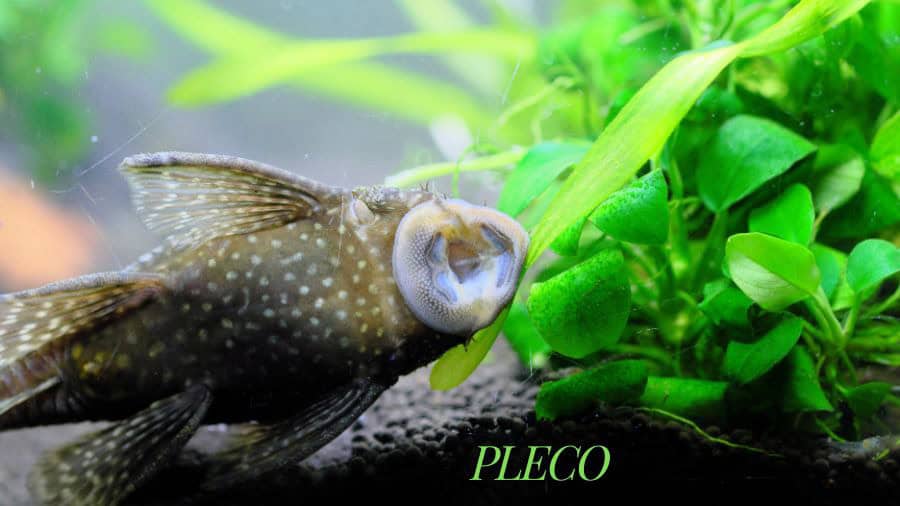
Do not add a pleco or loach just to clean the floor
Plecos and loaches include many species with different adult sizes, temperatures, and social needs. A general list that says either group is safe leaves out the information needed to choose responsibly.
Some grow too large for the tank; others need a group or warmer water. Feeding competition and contact with a slow fish are further reasons to be cautious. Research the exact species before purchase and do not expect it to live on waste.
Introduce a suitable companion and watch the result
- Prepare separate housing. Quarantine new livestock before it joins the established group, using species-appropriate guidance.
- Check the main tank. Confirm stable water tests, enough swimming space, and capacity for the added waste.
- Acclimate to the water. Avoid sudden temperature or water-chemistry changes.
- Observe feeding. Make sure each animal can eat without constant chasing.
- Keep testing. Check ammonia and nitrite as the waste load changes, and remove uneaten food.
Good feeding also means using suitable food and avoiding excess. The RSPCA feeding guide explains why leftover food and poor water quality matter.
Separate animals if you see repeated chasing, torn fins, persistent hiding, missed meals, or a snail that stays closed while fish peck at it. Recheck compatibility as the fish grow instead of treating the first quiet day as proof that the match is safe.
Home fish breeder sharing practical aquarium, egg-care, and fry-raising methods.
Related guides
Best Substrate for Goldfish: Safer Tank Options
Choose fine sand for an everyday display, or a bare bottom when easy cleaning matters most. See where gravel fits and what to avoid.
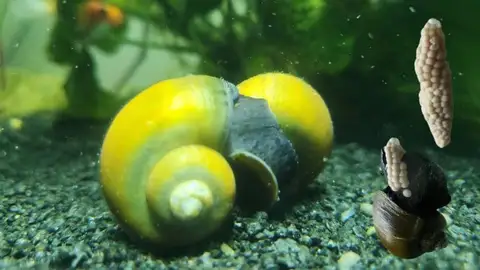
Mystery Snail Laid Eggs: What to Do
Keep a new clutch above water, decide whether to hatch it, and prepare for the tiny snails before they emerge.