
Best Substrate for Goldfish: Safer Tank Options
The best substrate for goldfish in my display tanks is smooth, fine aquarium sand because my fish can sift it and I can see waste on the surface. For a breeding or fry tank, a bare bottom makes cleaning easier. Avoid sharp grains and gravel that can lodge in a fish’s mouth.
I switched after one of my Black Moors got a piece of gravel stuck in its mouth. The right choice depends on your fish, plants, and cleaning routine, but mouth safety comes before color or appearance.
Choose a tank bottom that fits your setup
| Option | Where it works well | Main tradeoff |
|---|---|---|
| Fine aquarium sand | An everyday display with room for sifting | Keep it out of filter intakes and remove surface waste. |
| Smooth, oversized gravel | A planted setup where every stone is too large to swallow | Food and waste settle into the gaps. |
| Bare bottom | Fry care, breeding, or a setup that needs close cleaning checks | Less material for the fish to search through. |
| A few large, smooth stones | Small decorative areas with easy cleaning access | Heavy or unstable stones and hidden waste need attention. |
Buy a product suited to aquariums, rinse it as directed, and inspect the grains. Sand is not automatically smooth, and a bag labeled gravel is not automatically safe for every fish size.
Sand versus gravel: choose by grain shape and mouth size
Fine sand lets a goldfish work through small grains while searching for food. Gravel has larger spaces that can hold debris. The size between fine sand and stones too large to swallow is the concern when a fish picks up a piece it cannot release.
The RSPCA freshwater care guide advises choosing substrate that will not injure fish and gravel too large for goldfish to swallow. Recheck the size as your fish grow.
For a shared aquarium, match the bed to every animal’s needs. The companion guide explains why swimming ability, adult size, and feeding behavior matter too.
Select and rinse aquarium sand
Choose smooth, inert aquarium sand if you want a simple bed that is not designed to alter water chemistry. Read the label: some products are made to change hardness or pH, and some coarse products are sold as sand.
I used black aquarium sand and rinsed it in small batches in a dedicated fish bucket. I stirred each batch, poured off the cloudy water, and repeated until it cleared. My tank stayed clear when I added the prepared sand.
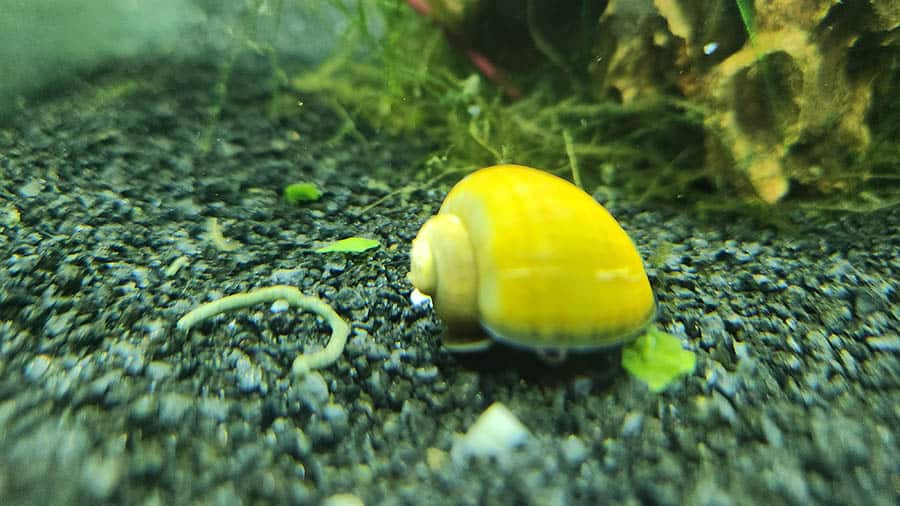
Follow the product’s instructions instead of assuming every sand needs the same preparation. PetMD’s goldfish care sheet also recommends rinsing substrate before use. Keep the layer shallow enough for your cleaning routine and plant choice. A deep bed added only for looks makes waste harder to manage.
Do not use garden soil or a material with unknown additives. If considering pool-filter sand, confirm its composition, grain texture, and lack of chemical treatments first. A product sold for aquarium use is a simpler choice when that information is unclear.
Keep the filter intake above the bed. Pour replacement water onto a plate or another suitable surface so it does not blast sand toward the intake.
Use gravel only if you can clean and size it safely
I began with gravel. It held its shape well, but food and waste fell between the pieces, so cleaning took more time. The mouth incident was the main reason I changed it.
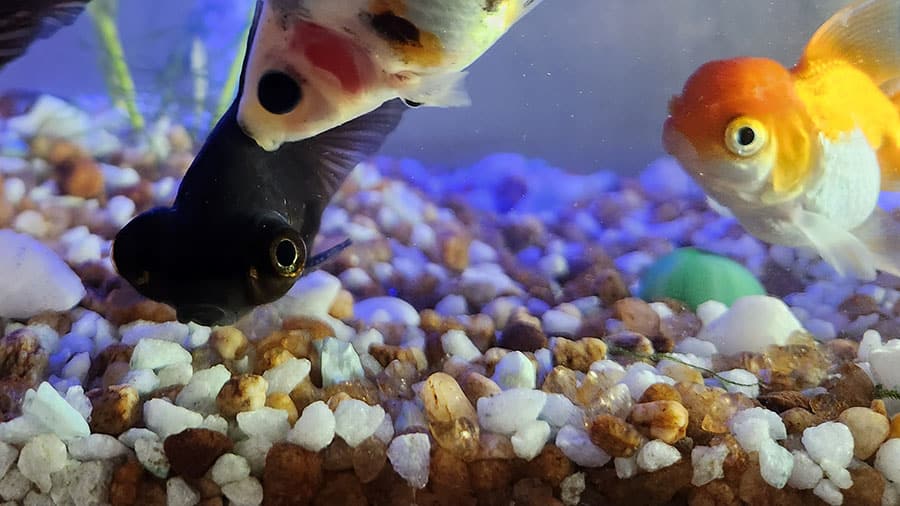
Choose rounded pieces that cannot fit in the mouth of the largest fish you expect to keep. Leave access for a gravel vacuum. Dark gravel may hide stains, but it does not remove waste.
If a fish cannot close its mouth or you can see a stuck object, seek prompt help from an aquatic veterinarian. Do not pull at an unseen obstruction with household tools.
Keep a bare bottom for fry and close observation
A bare floor lets you see leftover food and small fry. I use this approach for hatching fry and breeding, where careful waste removal is part of the daily routine.
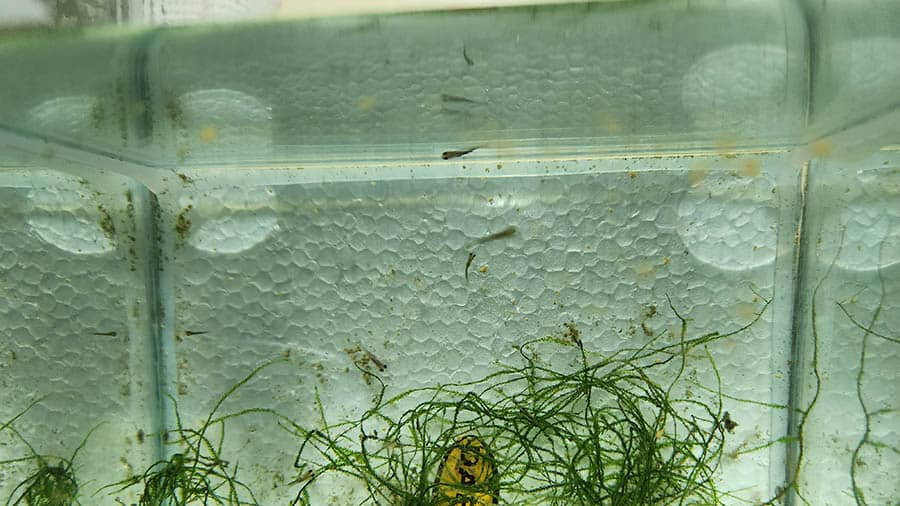
An empty floor does not make water care optional. Keep a mature filter, test the water, and provide cover suited to the fish. There is less loose material for adults to sift, so consider their behavior when choosing a permanent display setup.
Plan plants and stones around cleaning access
Plants need a setup suited to their roots and nutrients. Gravel is not always better for roots, and sand does not rule out plants. Plants attached to suitable wood or stones avoid the need for a deep planted bed.
Goldfish may dig up or graze plants. In my tanks, a carpeted floor was difficult to maintain. Choose plants with that behavior in mind rather than buying a carpet you cannot protect.
If you divide sand and gravel into separate areas, expect some mixing during digging and cleaning. Use only stable, smooth stones, and avoid a full layer of large rocks with gaps you cannot reach.
Clean the bed and protect the filter cycle
Hover a siphon above sand to lift waste without removing the whole layer. With gravel, use a suitable vacuum to reach debris between stones. RSPCA Australia describes regular partial water changes and gravel cleaning as part of goldfish care.
If you replace the bed, preserve mature filter media and avoid a deep filter clean at the same time. Test ammonia and nitrite afterward. Beneficial bacteria live on wet surfaces, and disturbing a system can affect its ability to process waste. University of Florida IFAS explains biological filtration.
No substrate replaces filtration or water changes. Pick the one you can maintain while giving your fish a suitable place to feed and explore.

Home fish breeder sharing practical aquarium, egg-care, and fry-raising methods.
Related guides
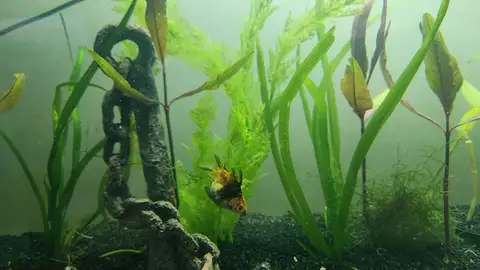
Goldfish Tank Mates That Live Well Together
Start with other goldfish of similar swimming ability, then check the risks before adding a different species.
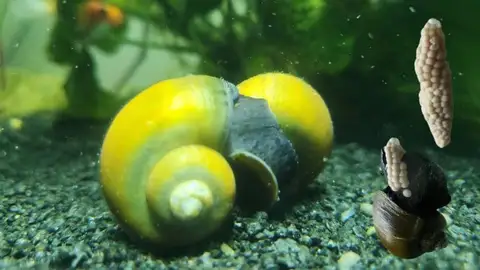
Mystery Snail Laid Eggs: What to Do
Keep a new clutch above water, decide whether to hatch it, and prepare for the tiny snails before they emerge.