
What to Do When Goldfish Lay Eggs
What to do when goldfish lay eggs can feel urgent when you have no nursery ready. My first spawn caught me that way: a Fantail was being chased, and tiny eggs appeared in the Java moss. Start with the stage you can see now, rather than buying supplies for every possible problem.
Protect the eggs now, prepare food before they swim
- Keep adults away from the spawn. Move the egg-covered plant or mop into a prepared nursery, or move the adults if the eggs are stuck to the tank itself.
- Keep the nursery stable. Use treated water that matches the original tank, gentle aeration, and a mature sponge filter. A new filter is not cycled just because it contains old tank water.
- Watch the eggs develop. Leave clear or amber eggs in place. Remove opaque white or fuzzy eggs if you can do so without damaging their neighbors.
- Wait for free swimming before feeding. Newly hatched young use a yolk sac first. Have suitably tiny fry food ready before that stage ends.
- Check water and feeding each day. Remove leftovers, test ammonia and nitrite, and make partial water changes as needed. Plan extra space before the fry outgrow the nursery.
Goldfish scatter eggs and can eat the spawn. The OATA fancy goldfish care sheet recommends moving egg-covered plants or mops to another tank after spawning.
Move the egg-covered surface, not each egg
Sticky eggs are easier to handle while attached to moss or yarn. Lower a clean container around the plant or mop and move it with water, keeping the eggs submerged. Do not squeeze the strands or scrape eggs off glass to collect them.
If most eggs are on the tank walls, moving the adult fish may be the simpler choice. Their temporary home still needs enough space and suitable filtration. A small breeder box is not housing for an adult goldfish.
Check the female after the chase. Separate her from persistent males if she cannot rest. Injuries, heavy breathing, or trouble swimming need prompt advice from an aquatic veterinarian. Do not press her belly to try to release more eggs.
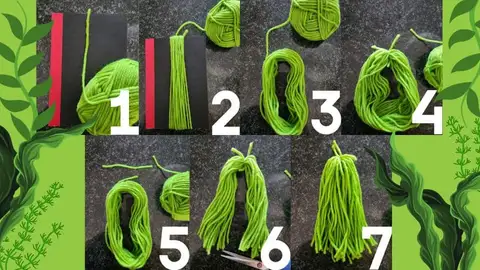
For a planned spawn, learning how to make a spawning mop gives you a surface you can lift out afterward. Goldfish’s egg-scattering method is described in the Merck Veterinary Manual.
Set up a nursery that can handle waste
Use a clean aquarium with a mature sponge filter, an air pump, a thermometer, dechlorinator, and water tests. Keep the current gentle enough that hatchlings are not swept around. Protect any other filter intakes with suitable fine sponge.
Match temperature and water chemistry before a transfer. Avoid a sunny windowsill, where a small tank can heat quickly. A bare floor helps you spot food and fry during cleaning; our guide to the best substrate for goldfish compares it with display-tank options.
If you have no mature filter, ask a trusted aquarium shop about media from a healthy system. Moving aquarium water alone does not bring the established bacterial colony a filter needs. University of Florida IFAS explains biological filtration and why new filters take time to process waste.
Until the filter can cope, test at least daily. Aim for no detectable ammonia or nitrite. Use partial changes with matched, dechlorinated water when either appears, then retest. Do not use green water or bottled additives as a reason to skip these checks.
Look for development, rather than a fixed hatch date
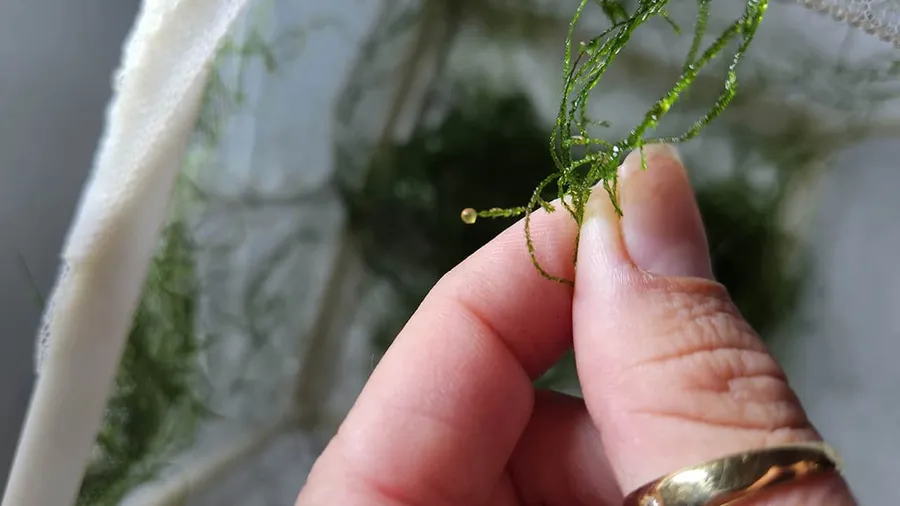
In my first batch, I kept eleven eggs that developed, and all eleven hatched. Some of the others turned white. That is one batch’s result, not a hatch-rate promise.
Developing eggs may stay clear to amber, with dark eye spots becoming visible. White eggs can be unfertilized or may have stopped developing. Color alone cannot prove that a newly laid egg is fertile.
Expect hatching over several days, with timing affected by temperature. A new hatchling may hang from a surface instead of swimming. That resting stage is different from a dead egg. Keep conditions steady rather than turning up the heat to chase a deadline.
Use a pipette to lift loose dead eggs where practical. Leave a firmly attached one alone if removing it would crush healthy eggs. Do not add antifungal medicine as a routine step without guidance suitable for eggs and fry.
Start feeding when fry leave their resting surfaces
Once fry swim freely and seek food, offer tiny portions of a food they can swallow. Freshly hatched brine shrimp are a common choice; very small fry may need smaller live foods or a fine commercial starter feed. Watch for feeding rather than assuming that food in the water means full bellies.
Breeder Bob Jones describes the yolk-sac stage, early feeding, and the need to remove leftovers in the Bristol Aquarists’ Society fry-raising guide.
Offer several small meals through the day instead of one large pile. Siphon waste slowly with narrow tubing into a light-colored container so you can spot any fry drawn out. Never start a siphon by mouth.
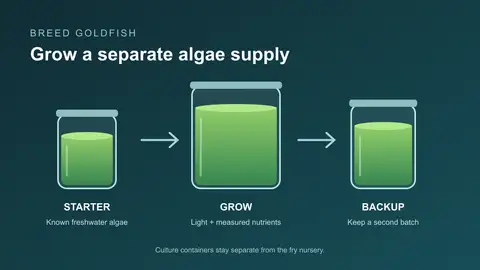
For a separate supply of algae to feed small live-food animals, see how to make a green water culture. It takes preparation and does not replace a first-food supply for fry that need feeding today.
Before attempting another spawn, use the goldfish breeding simulator to practice the choices from egg protection to feeding and space. Raising the whole clutch is only realistic if you can provide daily care and homes for the growing fish.

Home fish breeder sharing practical aquarium, egg-care, and fry-raising methods.
Related guides
How to Make a Spawning Mop for Goldfish
Turn acrylic yarn into an egg-collecting tassel with a book, scissors, and a suction cup. Follow the steps and check the finished mop before use.
How to Make a Green Water Culture
Grow a separate freshwater algae supply with a known starter, suitable nutrients, and steady light. Use it to support a live-food plan for young fish.
Mystery Snail Laid Eggs: What to Do
Keep a new clutch above water, decide whether to hatch it, and prepare for the tiny snails before they emerge.