When to Feed Goldfish Fry
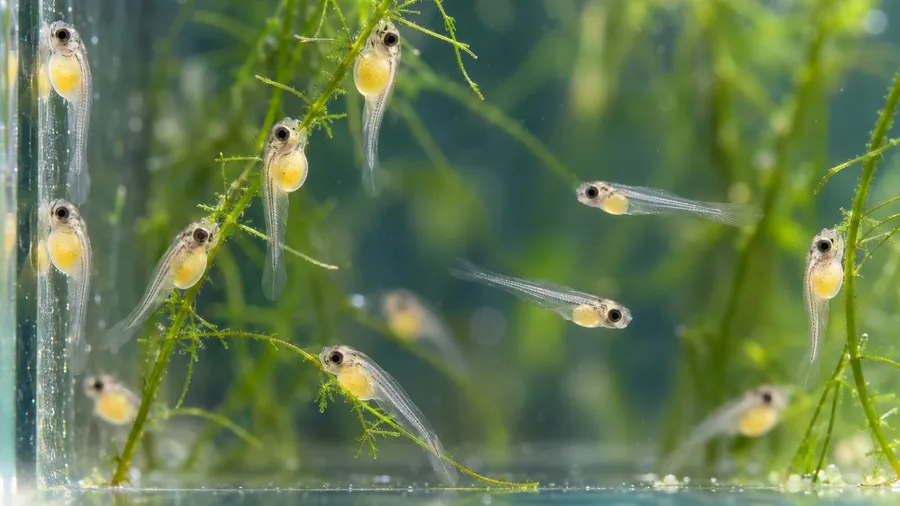
Fresh hatchlings look like slivers of glass stuck to the tank walls. It’s tempting to drop food in right away, but they can’t eat it yet, and the leftovers only foul the water.
Start feeding when the fry let go of the glass and swim around looking for food. Breeder Bob Jones says they hang there for about two days while they absorb their yolk sacs.
Water temperature moves that day around, just as it moves the hatch itself. In a 2023 study, fry first ate about 9 days after laying at 64°F (18°C), 6 days at 72°F (22°C), and 5 days at 79°F (26°C).
A feeding schedule for the first four weeks
| Fry age | What to feed | How often |
|---|---|---|
| Hatching until they swim | Nothing. The yolk sac feeds them. | No meals yet |
| First day of swimming | Tiny clouds of mashed or liquid fry food | A few small doses |
| Day 2 of swimming on | Newly hatched brine shrimp | 3 to 5 small meals a day |
| About days 10 to 14 on | Add very fine daphnia, then the finest powdered food | 3 to 5 small meals a day |
This follows the routine in the Bristol Aquarists’ Society fry guide, where Bob Jones feeds four times a day, roughly every four hours. Aquarium Co-Op suggests a similar 3 to 5 small meals a day.
As the fry grow, the Merck Veterinary Manual lists crushed flake and small live or frozen foods as suitable choices.
Start the brine shrimp a day early
Brine shrimp eggs take about 24 hours to hatch in salt water kept at 80 to 82°F (27 to 28°C), says Ocean Rider’s hatching guide. Start a batch on the fry’s first day of swimming, and it will be ready the next morning, right when the schedule calls for it. Our step-by-step brine shrimp guide covers the salt, light, and harvest.
Offer small amounts at a time, because brine shrimp die quickly in fresh water. The same University of Florida guide explains why young Moina make a good freshwater food for fry.
How much to feed
Give only what the fry can finish, and watch them eat for a minute or two. Bob Jones siphons out uneaten food after a couple of hours and never leaves it in overnight.
Every meal adds to the waste in the tank. The University of Florida notes that more food means more ammonia, and you can’t see or smell it, so test the water daily while you’re feeding often.
How long fry can go without food
In a study of goldfish fry, fry that waited 4 or 8 extra days for their first meal survived about as well as fry fed on time. A 12-day wait cut survival.
That gives you a little room if food runs late, but it’s not a reason to wait. The researchers still advise against delaying the first feeding.
If fed fry still die
Fry that are eating can still be lost to water problems, crowding, or a swim bladder that never filled. If you’re finding losses each day, work through the common causes of fry deaths next.
The clutch tracker turns this schedule into a daily checklist for your fry’s age, so no feeding gets missed.
Free for breeders
Raising fry to sell?
Put your fish room in our breeder directory, where keepers look for fish by state and variety. A listing is free, and you stay in charge of it.
Home fish breeder sharing practical aquarium, egg-care, and fry-raising methods.
Related guides
Brine Shrimp for Goldfish Fry: How to Hatch and Feed Them
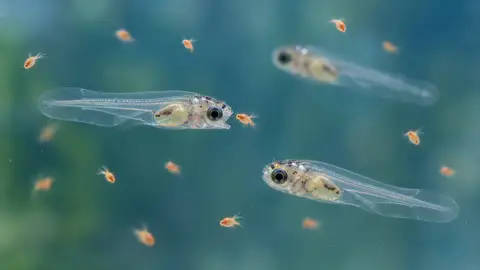
Newly hatched brine shrimp are a classic first live food. Learn how to hatch them in about a day, when to start a batch, and how to feed without fouling the nursery.
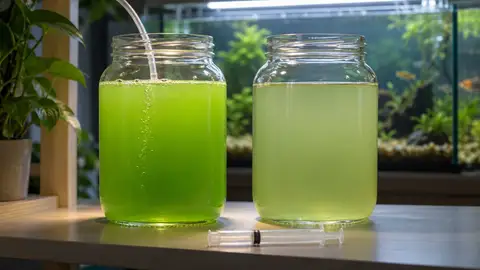
How to Make a Green Water Culture
Grow a separate freshwater algae supply with a known starter, suitable nutrients, and steady light. Use it to support a live-food plan for young fish.
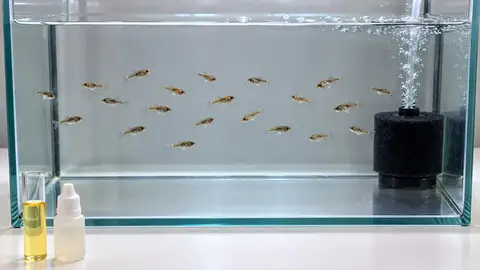
Why Are My Goldfish Fry Dying?
Losing fry every day? Match their age and what you see to the likely cause, then fix the water, food, or setup before more are lost.