Why Are My Goldfish Fry Dying?
Finding tiny bodies on the bottom every morning is hard to watch. Smith’s Aquatics points out that some losses in the first few days are normal, even in good conditions. Losing most of a clutch means something needs to change.
Most fry deaths come down to water quality, food, tank mates, or stress. The age of your fry and what you see will narrow it down fast.
| What you see | Likely cause | Fix to try first |
|---|---|---|
| Several die at once, at any age | Ammonia or nitrite | Test, then change part of the water |
| Losses start right after a water change | A jump in temperature | Match the new water first |
| Fry fade in the first week of swimming | Hunger | Tiny live food, several times a day |
| Fry wriggle along the bottom | Swim bladder never filled | Keep the surface easy to reach |
| Bent or curled from the day they hatch | Eggs kept too cold or too hot | Hold the next clutch near 75°F (24°C) |
| A few big fry, many small ones fading | Crowding | More room and more meals |
| Fry vanish without a trace | Eaten, or pulled into a filter | Cover intakes and check tank mates |
Ammonia and nitrite
Ammonia is colorless and odorless, so a test kit is the only way to know it’s there. The more food goes in, the more ammonia the fish make.
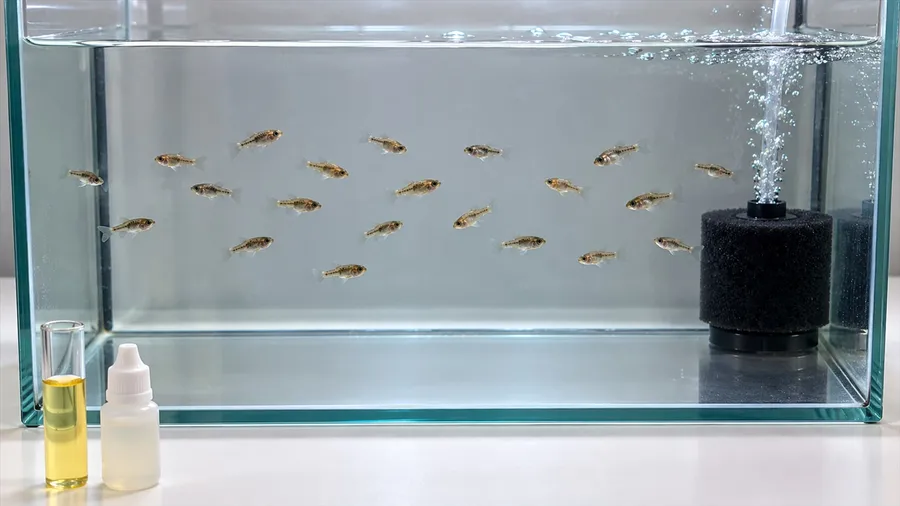
Test every day while the fry are small, and aim for zero ammonia and nitrite. If either shows up, swap out part of the water and test again.
Water changes that shock them
Fry are far more sensitive than adults to sudden changes in temperature or water chemistry, Smith’s Aquatics warns. Paul Green of the Goldfish Society of Great Britain advises in Practical Fishkeeping that any temperature change, up or down, should be gradual.
Check new water with a thermometer before it goes in, and treat tap water with dechlorinator first.
Hunger in the first week
New fry have tiny mouths, and food they can’t swallow just sinks and rots. The Bristol Aquarists’ Society fry guide starts with a mashed or liquid fry food, then adds newly hatched brine shrimp four times a day.
Our fry feeding schedule shows what to give at each age and how to time the first meal.
Fry stuck on the bottom
Young fish fill their swim bladder by swimming up and gulping air at the surface. In a study of zebrafish, a small relative of the goldfish, blocking that trip to the surface stopped the swim bladder from filling.
Fry that never fill it are called belly sliders. In a study of another small fish, they moved mainly along the bottom and grew more slowly than fish that swam normally. Keep the surface open and the flow gentle in the first days after hatching.
Eggs kept too cold or too hot
The temperature during incubation shapes the fry. In a 2023 study, about 12% of fry from eggs kept at 64°F (18°C) were deformed, compared with about 5% at 79°F (26°C), and every fry from 93°F (34°C) had defects.
That damage happens before hatching, so the fix is for your next clutch. See hatch times at each temperature to pick a steady setting.
Crowding and uneven growth
Fry kept together don’t grow at the same speed. In a lab study, some fish raised in groups grew far bigger than their siblings.
Bob Jones, who wrote the Bristol guide, lists good water, good food, heat, and space as what fry need to grow quickly. As they get bigger, spread them across more tanks or tubs.
Fry that vanish
Adult fish, parents included, eat fry. The same manual warns that a nursery pump should never be strong enough to pull fry in.
Dead fry don’t always stay on the bottom either. In a goldfish feeding study, dead fry were found partly eaten in tanks that held only other fry.
Find the pattern with a daily log
Write down a fry count and an ammonia and nitrite reading every day. When losses line up with a high reading, a big water change, or a missed feeding, you’ve found your cause.
The clutch tracker keeps that log for each clutch and lists the care your fry need each day. If fry keep dying with clean water and plenty of food, ask an aquatic vet for help. Once losses settle, the next change to watch for is when baby goldfish turn orange.
Free for breeders
Raising fry to sell?
Put your fish room in our breeder directory, where keepers look for fish by state and variety. A listing is free, and you stay in charge of it.
Home fish breeder sharing practical aquarium, egg-care, and fry-raising methods.
Related guides
When to Feed Goldfish Fry
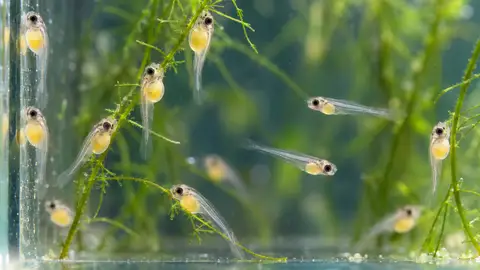
Newly hatched fry live off their yolk at first. See the sign they're ready to eat, what to offer first, and how often to feed in the first month.
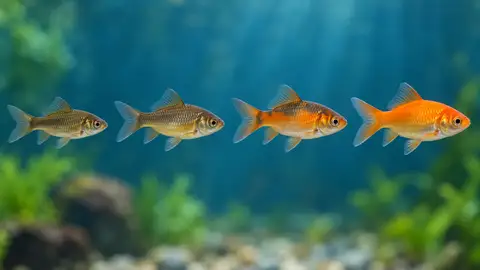
When Do Goldfish Fry Get Their Color?
Baby goldfish stay brown or bronze for months. See when the orange usually shows up, why some fish change faster, and which dark patches need a vet.
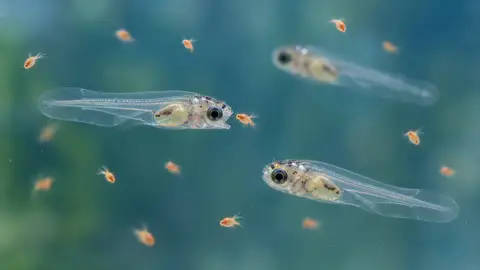
Brine Shrimp for Goldfish Fry: How to Hatch and Feed Them
Newly hatched brine shrimp are a classic first live food. Learn how to hatch them in about a day, when to start a batch, and how to feed without fouling the nursery.