
How to Make a Spawning Mop for Goldfish
How to make a spawning mop is a useful skill when you want to collect eggs without pulling apart your planted tank. The length should suit your aquarium, and the finished strands should be easy to inspect. This is the simple yarn method I used, with a suction cup to hold the mop in place.
Wrap, tie, and cut: the complete method
You need: new 100% acrylic yarn, a book or piece of stiff cardboard, scissors, an aquarium suction cup with an attachment loop, and a clean container for rinsing.
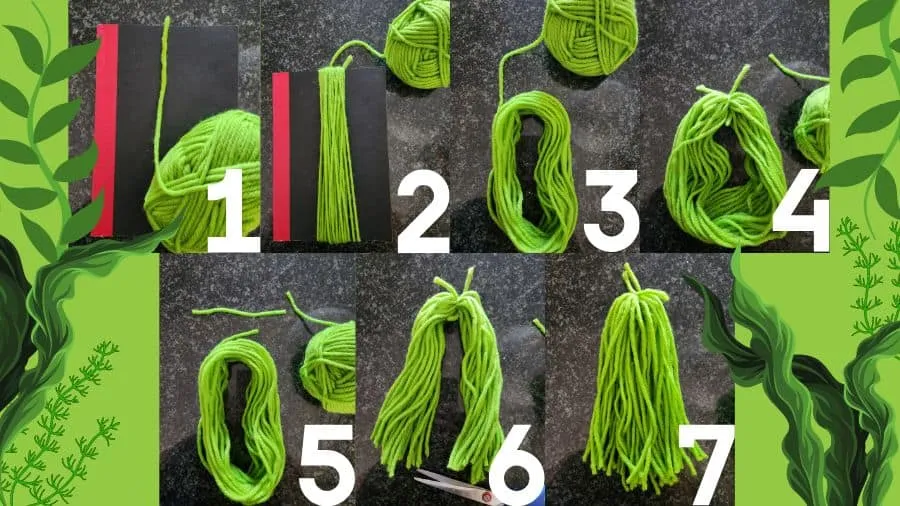
- Choose the length. Use a book or card about as tall as you want the strands to hang.
- Wrap the yarn. Wind it around the book about 30 to 50 times, then cut it free from the ball. I used about 30 wraps for the mop shown below.
- Tie the top. Slip a separate piece of yarn under the bundle at one end. Tie a firm double knot, leaving ends long enough to attach the suction cup.
- Open the strands. Slide the bundle off the book. Cut through all the loops at the end opposite the knot.
- Trim and attach. Remove loose scraps, even up the ends, and tie the mop securely to the suction cup. Keep the attachment loop short and snug.
- Rinse and check. Rinse without soap, then soak in dechlorinated water. Reject yarn that releases dye, has a strong odor, or sheds fibers. Check every knot before placing it in the tank.
Choose plain yarn and a secure attachment
Read the fiber label. Choose plain acrylic without glitter, metallic thread, scent, or added treatments. A dark green mop gives some contrast when you look for pale eggs, but the material matters more than the color.
The Aquarium Co-Op yarn-mop instructions use 100% acrylic and describe the same basic construction for egg-scattering fish, including goldfish. Their mop can attach to the glass, float, or sink; a suction cup keeps this version simple.
A fiber label alone does not certify every dye or coating for aquarium use. If the yarn’s treatment is unclear, ask its maker or choose a purpose-made aquarium mop. Rinsing cannot make an unknown chemical treatment safe.
Use an attachment sold for aquarium use. Skip used wine corks, exposed wire, metal clips, and painted weights. The mop should not have a large tied loop that a fish could swim into.
Fit the mop to the tank
Press the suction cup onto clean glass near a place the fish already use. Let the strands hang freely with open swimming space around them. Keep them clear of filter intakes and sharp decorations.
For a lower mop, place the suction cup farther down the glass. Trim strands that pile into a tangled mass on the floor. There is no need to fill the aquarium with yarn or make the bundle as thick as possible.
Check that a light tug does not loosen the knot or release the suction cup. Watch the fish after fitting it. Remove the mop if strands catch on fins or the fish struggle to pass it.
A mop provides a surface for sticky eggs; it does not make unready fish spawn. Seasonal conditions, nutrition, and suitable adults still matter, as the Merck Veterinary Manual’s reproduction guide explains.
Move the mop after spawning
Have the nursery ready before you add the mop. Once spawning has finished, check the strands for small attached eggs. Transfer the whole mop in a clean container of water, keeping the eggs submerged instead of picking them off.
Goldfish can eat their eggs, so do not leave the mop with adults for days while you wait for hatching. Follow what to do when goldfish lay eggs for nursery water, egg checks, and first feeding.
If this is your first planned spawn, the goldfish breeding simulator lets you practice the care decisions that come after collecting the eggs.
Check the mop before its next use
Once no eggs or fry remain, remove trapped debris and rinse the strands. Check for loose knots, broken fibers, and tangles. Replace a worn mop instead of tying extra loops around damaged sections.
Rinsing removes debris but does not disinfect equipment. Keep each mop with its own healthy system, and do not move it from a sick tank to a nursery. UF/IFAS biosecurity guidance recommends separate equipment to reduce disease transfer between systems.
Let the clean mop dry fully before storage. Do not assume boiling suits every yarn or attachment; check the material maker’s instructions before using heat or a disinfectant.
Home fish breeder sharing practical aquarium, egg-care, and fry-raising methods.
Related guides
What to Do When Goldfish Lay Eggs
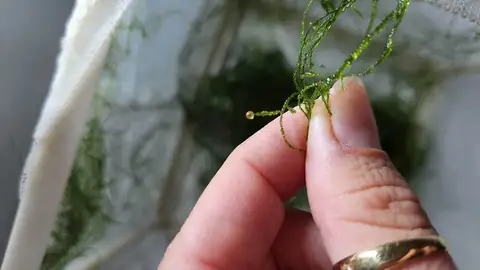
Found eggs after a spawn? Protect them from the adults, prepare a nursery, and recognize when the young are ready for their first food.
How to Make a Green Water Culture
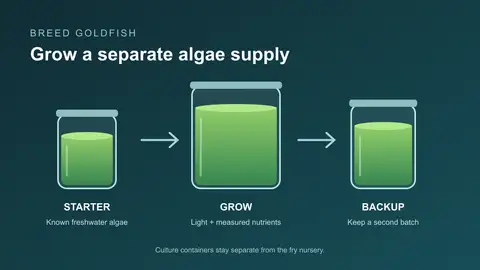
Grow a separate freshwater algae supply with a known starter, suitable nutrients, and steady light. Use it to support a live-food plan for young fish.
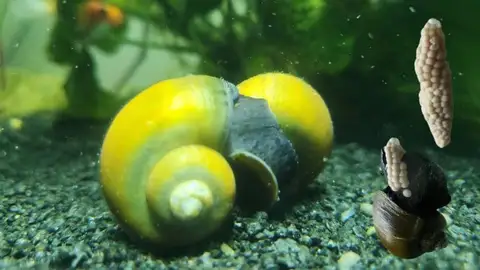
Mystery Snail Laid Eggs: What to Do
Keep a new clutch above water, decide whether to hatch it, and prepare for the tiny snails before they emerge.